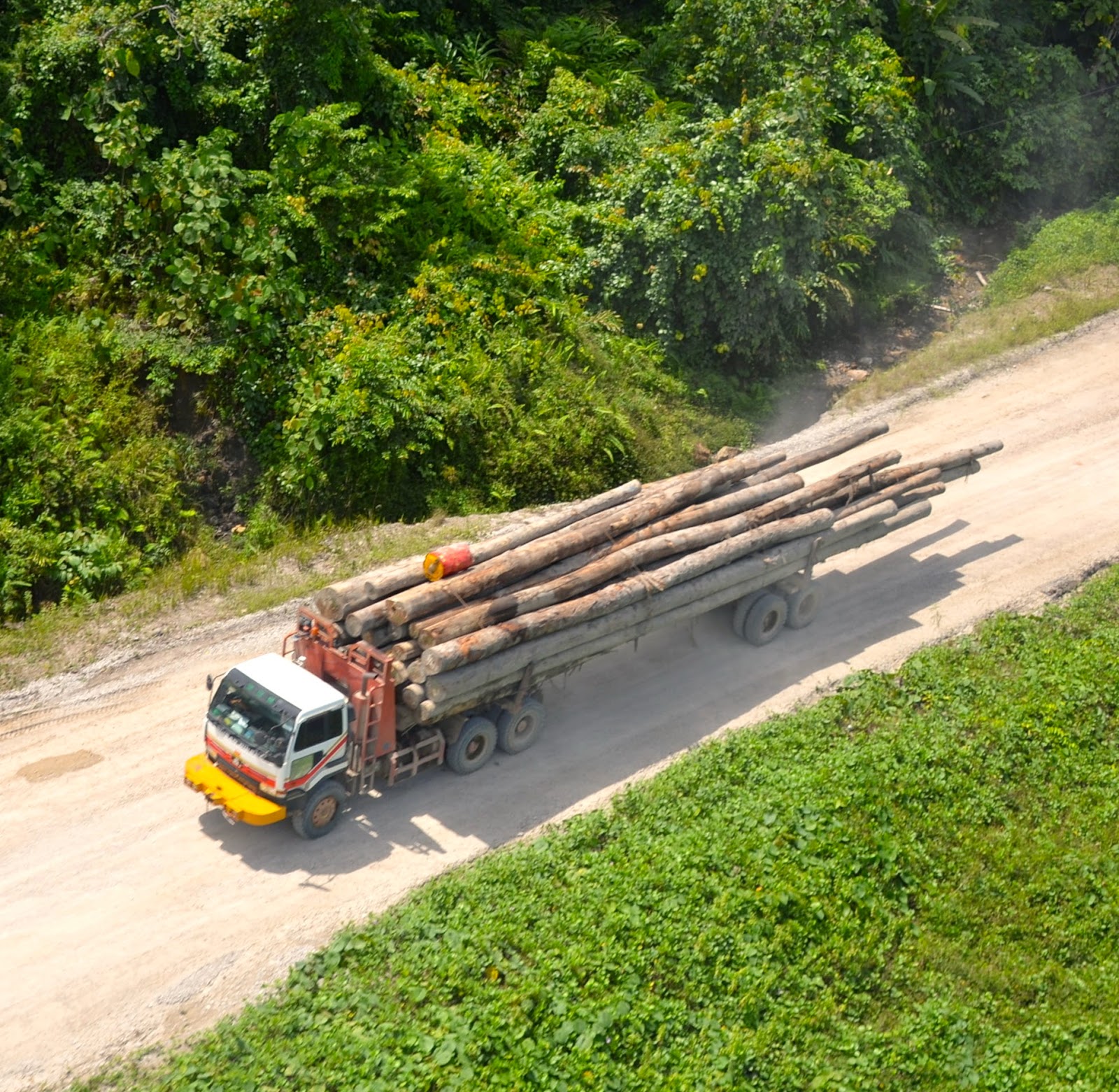
Directly or indirectly the impact of humans (Primates: Hominidae: Homo sapiens) on the planet´s biodiversity is devastating.
The following videos, a comprehensive listing of animals extinct in the 19th, 20th and 21st centuries, will give you an idea of the extent of this problem, in which one way or another, putting the exceptions aside, we humans have had or had something to do with it.
Obviously, the way we are going right now, devouring and squandering Earth´s limited natural resources, sooner or later we will face the same fate.
One of the most highly-regarded natural history photographers, National
Geographic Fellow Mattias Klum has a special passion for Borneo, where
he has spent 20 years producing magazine articles, books and films.
Don't miss this powerful and disturbing vision of what might be the
Borneo rain forest's last stand. [National Geographic]
"Although
we may all look apart, we are all one. And one needs the other one. One
is not only one but many ones hooked like one in unbeknownst ways to
all the ones that compose the only one - the Biosphere- that looks like
it is not one but it is one indeed.
Since we are all stuck on this beautiful Earth, we must join forces to change our fucking blind course.
Being on top is definitely not sustainable.
Any "sapiens" out there left?
Let
us hear your voice in support of those who look like they have no
voices but indeed have voices. Not only their own but also yours and
ours.
We are all one after all. But we have got to act like one on this business of taking care of Earth.
Let us do something for ourselves. But we are talking about the ourselves that comprises all of ourselves.
Even
though they may not look like ourselves or they are not ourselves, they
are indeed ourselves. All ourselves are one ourselves on this planet,
our dear Earth."
We are at a crucial point in our history. What each
of us humans do from now on will impact the future of planet Earth. We Homo "sapiens"
are the ones endangering the Biosphere, the thin layer that separates us from
the vastness of the inhospitable outer space.
Atom by atom added together have resulted in each of us, human or nonhuman. Big
things are made up of small things. Therefore, each of our decisions counts for
the fate of the Earth.
Other non-humans from the lowly bacteria and algae to whales and sequoias are
already working towards the maintenance of the Biosphere, for they are the cogs
of a complicated mechanism that sustains life on this planet. They teach us how
to do it.
Now it's our turn. We already know enough to get to work for the good of
everyone on Earth. It's time to get down to work.
We must put aside our grudges and selfishness and look together into infinity
without ever losing sight of the ground, always aware that the thread of life
of every one of us is not in our hands but in those of their neighbours. If our
neighbour is well, so will we. One is all and all is one.
Therefore, we must think globally and act locally. The clock does not stop. It
continues ticking away. Meanwhile where have you been? What have you done? What
you did, does it add or subtract to the whole?
We leave you with a video to make reflection:
Estamos en un punto crucial de nuestra historia. Lo que cada uno de nosotros los humanos hagamos de hoy en adelante impactará en el futuro del planeta Tierra. Somos nosotros los Homo "sapiens" los que estamos poniendo en peligro la Biosfera, esa fina capa que nos separa de la inmensidad inhóspita del espacio exterior.
Atomo a átomo sumados en conjunto han dado origen a cada uno de nosotros, humano o no humano. Lo grande está hecho de lo pequeño. Por lo tanto, cada una de nuestras decisiones cuentan para el destino de la Tierra.
Los demás seres no humanos desde la humilde bacteria y alga hasta la ballena y sequoya ya colaboran lo suyo, ya son dientes de un complicado mecanismo que mantienen la vida sobre el planeta. Ellos nos enseñan cómo hay que hacerlo.
Ahora
es nuestro turno. Ya sabemos lo suficiente como para ponernos a
trabajar por el bien de todos en la Tierra. Ha llegado la hora de
ponernos manos a la obra.
Debemos dejar de lado nuestras rencillas y egoísmos y mirar juntos hacia el infinito sin jamás perder de vista el suelo, siempre conscientes de que el hilo de la vida de cada uno de nosotros no está en nuestras manos sino en aquellas del vecino. Si nuestro vecino está bien, también lo estaremos nosotros. Uno somos todos y todos somos uno.
Por lo tanto, debemos pensar globalmente y obrar localmente. El reloj del tiempo no para. Sigue su marcha. Mientras tanto ¿dónde has estado? ¿Qué has hecho? Lo que has hecho, ¿le añade al todo o le resta?
"Man´s reach is extending beyond earth, ever farther into the cosmos with each passing year. He eagerly studies the signals sent back from his multimillion dollar satellites and wonders if another planet could sustain life. Man would be ecstatic to find even a few microscopic forms of life in the dust of another planet. Yet on earth, without hesitation or regret, and always in the name of "progress", he systematically destroys one plant and animal species after another."
Tim Marshall
Man´s GreatestFear. The Final Phase of Human Evolution (1995, p. 44)
Professor Iain Stewart takes us on a wonderful tour: The Miracle of Plants. Plants show us how to grow a planet.
Plants are ecosystem engineers. Their gift and miracle is a life-giving atmosphere. We depend on plants to live.
Nevertheless we have yet to learn how to treat plants right, in a very thankful way. We do not treat them as they deserve. We are destroying the life-sustaining forests on Earth.
Humankind is at a crossroad nowadays. The future of this planet hangs in the balance. We must choose the right road, otherwise there will be no future for our own species.
Environmental
devastation of the land, water, and air - the largest industrial energy project
in the world is extracting crude oil from bitumen found beneath the pristine
boreal forest of Alberta, Canada. Effecting a land mass equivalent in size to
Florida or England, Both industry and government are putting money before the
health and security of its people and the environment.
Tar sands
take 3 barrels of water to process every barrel of oil extracted. Ninety
percent of this water becomes so toxic that it must be stored in tailing ponds.
Unfortunately these ponds regularly leach pollution into the third largest
watershed in the world.
Water
depletion, exploitation, privatization and contamination has become one of the
most important issues facing humanity this century. Check out my other video on
water issues:http://www.youtube.com/watch?v=XMmpg35Bym0and see my other videos to learn about the dark side
of fossil fuels.
To learn more
about tar sands, be sure to check out the featured film sources listed below.
Find out more about what you can do and how to support the film makers.
Tar sands
development can be minimized by blocking development of pipelines, such as
Keystone XL, that carry the sludge of this incredibly polluting energy project.
Tell Canada to clean up this mess and join with Bill McKibben and Josh Fox and
let your voice be heard.
Disclaimer: The information on this site
is for educational and entertainment purposes only. There is no intent, express
or implied, to promote illegal activities. We assume no liability for the
potential actions of any third party. All data compiled here has been gathered
from, and is available through, independent public sources.