English/Español

viernes, 22 de mayo de 2015


GLOBAL WARMING: END OF THE LINE
 |
| Source: BLAZINGCATFUR. |
“You do not repair
the climate of an entire planet without staggering sacrifices unless the burden
is shared with something like parity. To put that as succinctly as possible,
the days of paradise for a few are drawing to a close. The game of finding someone
else in some convenient misery to fight our wars, pull our rickshaws, and serve
as the offset for our every filthy indulgence is just about up. It is either
Earth for all of us or hell for most of us.”
Garret
Keizer
Harper’s, June 2007, p. 9-11
domingo, 10 de mayo de 2015
TASMANIA: SWIFT PARROTS FACING POPULATION COLLAPSE
 |
| Tasmania´s Swift Parrot (Lathamus discolor). Source: Wikipedia. |
Source: ANUchannel
View original
The iconic Tasmanian swift parrot is facing population
collapse and could become extinct within 16 years, new research has
found.
The researchers have called on the Federal Government to list the
birds as critically endangered.
"Swift parrots are in far worse trouble
than anybody previously thought," said leader of the study, Professor Robert
Heinsohn, from The Australian National University (ANU).
"Everyone,
including foresters, environmentalists and members of the public will be
severely affected if they go extinct," said Professor Heinsohn from the ANU
Fenner School of Environment and Society.
Swift parrots are major
pollinators of blue and black gum trees which are crucial to the forestry
industry, which controversially continues to log swift parrot
habitat.
The five-year study discovered that swift parrots move between
different areas of Tasmania each year to breed, depending on where food is
available.
The new data was combined with a previous study that showed
that swift parrots are preyed on heavily by sugar gliders, especially in
deforested areas.
The research predicted that the population of the birds
will halve every four years, with a possible decline of 94.7 per cent over 16
years.
A moratorium on logging in swift parrot habitat is needed until
new plans for their protection can be drawn up, said co-researcher, Dr Dejan
Stojanovic, also from ANU Fenner School.
"Current approaches to swift
parrot management look rather inadequate," he said.
"Our models are a
wake-up call. Actions to preserve their forest habitat cannot wait."
The
research has been published in the latest edition of Biological
Conservation.
jueves, 7 de mayo de 2015
INSIDE THE GARBAGE OF THE WORLD: A WAKE UP CALL DOCUMENTARY
 |
We humans are literally killing the oceans. We are destroying the living creatures that live in the oceans. And in turn we are killing ourselves.
How? With plastics. As simple as that.
Please take the time to watch the following documentary on plastics in the world´s oceans. It is excellent!!
Source: Philippe Carrillo
Is the Plastic Trash Island floating in the Pacific Ocean
a myth?
Are we getting poisoned?
Are we getting poisoned?
How long do we have before a worldwide
disaster happen?
This Documentary includes interview from Capt. Moore
(Algalita Marine Research Institute), Anna Cummins (5 gyres Institute), Dr
Andrea Neal (Jean-Michel Cousteau), Surfrider Foundation and a variety of
Scientist and Doctors who have been researching how bad the situation is.
It
will give you a real idea of how much damage we are creating and how fast we
have to stop in order to survive the future.
Thank you.
lunes, 4 de mayo de 2015
COSTA RICA: THE DARK SIDE OF PINEAPPLES (EL LADO OSCURO DE LAS PIÑAS)
 |
| Pineapples (Ananas comosus). Source: cr.hoy.com |

By Gundhramns Hammer
May 4, 2015
Select, paste & translate
Upon hearing the name "pineapple", average Europeans or Americans might conjure images of the lushy tropical vegetation and its great variety of fruits.
For those of you hunting after pineapples, here are a few questions:
- Do you like pineapples?
- Do you enjoy eating this tropical fruit?
- Do you know anything about the working conditions of the workers that slave away picking up the pineapples somewhere in the tropics?
- Do you give a damn about them?
- Do you care about the toxic chemicals used in pineapple monocultures?
- Do you care about the social and ecological impact this crop has on the local communities and environment where this fruit is planted?
If so, we have an interesting documentary (Video 1) for you which will show you the truth multinationals do not want you to know about pineapples. We will go to Costa Rica to find out what is going on there:
Source: YouTube
Guerras de precios de los supermercados, residuos tóxicos
y frutas tropicales. Una producción de Guardian Films para Consumers
International y la OCU, este documental de investigación expone condiciones
sociales y ambientales inaceptables que padecen las comunidades productoras de
piña en Costa Rica ... y por qué los supermercados más importantes de Europa
deben compartir la culpa.
Watch this documentary with subtitles
in Danish/Dansk (here/her)
or French/Français (here(ici).
Only English (here).
This is basically what happens wherever pineapples are cultivated in the tropics, whether it is in Nigeria, Costa Rica, Brazil, Colombia, Panama (Fig. 1) or anywhere else.
 |
| Figure 1. Worker applying pesticides in pineapple (Ananas comosus) field in Panama. Source: OIRSA (2000). |
It is a crop that requires human labour and intensive use of agrochemicals, particularly herbicides and insecticides.
Now you know. It is up to you whether you buy this delicious fruit when imported and sold in the supermarkets in your city.
Unless you grow them ecologically, which means no use of man-made chemicals and living in the tropics, pineapples (Ananas comosus) sold in our supermarkets always contain residues of dangerous agrochemicals such as glyphosate, and multiple organophosphate and organochlorine compounds such as aldrin, parathion, DDT, endosulfan, heptachlor, disulfoton, dimethoate (Gutiérrez et al., 2010), amongst others.
Consider yourself lucky if you can get this delicious fruit through fair trade which is being implemented in some tropical countries (e.g., Costa Rica).
But beware of tricksters that might use fair trade to do some wheeling and dealing!
References
García D. (2013). El Lado Amargo de la Piña. cr.hoy.com, Noticias 24/7, Costa Rica.
Gutiérrez J. A., Pinzón M. I., Londoño A., Blach D. & Rojas A. M. (2010). Residuos de Plaguicidas Organoclorados, Organofosforados y Análisis Fisicoquímico en Piña (Ananas comosus). Agro Sur. 38 (3): 199-211.
OIRSA (Organismo Internacional Regional de Sanidad Agropecuaria) (2000). Manual Técnico: Uso y Manejo Seguro de Plaguicidas en el Cultivo de Piña. Panamá. 33 pp.
OIRSA (Organismo Internacional Regional de Sanidad Agropecuaria) (2000). Manual Técnico: Uso y Manejo Seguro de Plaguicidas en el Cultivo de Piña. Panamá. 33 pp.
domingo, 5 de abril de 2015
THE LAST MOUNTAIN: PATRIOTIC CITIZENS TRYING TO STOP BIG COAL CORPORATIONS FROM BLOWING UP MOUNTAINS IN APPALACHIA
 |
| Source: Coal River Mountain Watch. |
Source: The Disinfector via YouTube
View original
In the valleys of Appalachia, a battle is being fought over a mountain. It is a battle with severe consequences that affect every American, regardless of their social status, economic background or where they live. It is a battle that has taken many lives and continues to do so the longer it is waged. It is a battle over protecting our health and environment from the destructive power of Big Coal.
The mining and burning of coal is at the epicenter of America's struggle to balance its energy needs with environmental concerns. Nowhere is that concern greater than in Coal River Valley, West Virginia, where a small but passionate group of ordinary citizens are trying to stop Big Coal corporations, like Massey Energy, from continuing the devastating practice of Mountain Top Removal.
The citizens argue the practice of dynamiting the mountain's top off to mine the coal within pollutes the air and water, is responsible for the deaths of their neighbors and spreads pollution to other states. Yet, regardless of evidence supporting these claims, Big Coal corporations repeat the process daily in the name of profit. Massive profit allows Big Coal to wield incredible financial influence over lobbyists and government officials in both parties, rewrite environmental protection laws, avoid lawsuits and eliminate more than 40,000 mining jobs, all while claiming to be a miner's best friend. As our energy needs increase, so does Big Coal's control over our future. This fact and a belief that America was founded on the democratic principal that no individual or corporation owns the air and water and we all share the responsibility of protecting it, drives these patriotic citizens and their supporters from outside of Appalachia, like Robert F. Kennedy, Jr., to keep fighting.A passionate and personal tale that honors the extraordinary power of ordinary Americans when they fight for what they believe in, THE LAST MOUNTAIN shines a light on America's energy needs and how those needs are being supplied. It is a fight for our future that affects us all.
Written, directed and produced by Bill Haney, an award-winning documentary filmmaker and founder and president of the eco-housing start-up, Blu Homes, THE LAST MOUNTAIN was co-written and edited by Peter Rhodes and produced by Clara Bingham and Eric Grunebaum. Narrated by William Sadler, the film features original music by composer Claudio Ragazzi and includes the song "Your Control" by Crooked Fingers and Neko Case.
The Last Mountain by Bill Haney. Uploaded by Disinfector.
jueves, 2 de abril de 2015
BORNEO´S BIODIVERSITY UNDER SIEGE
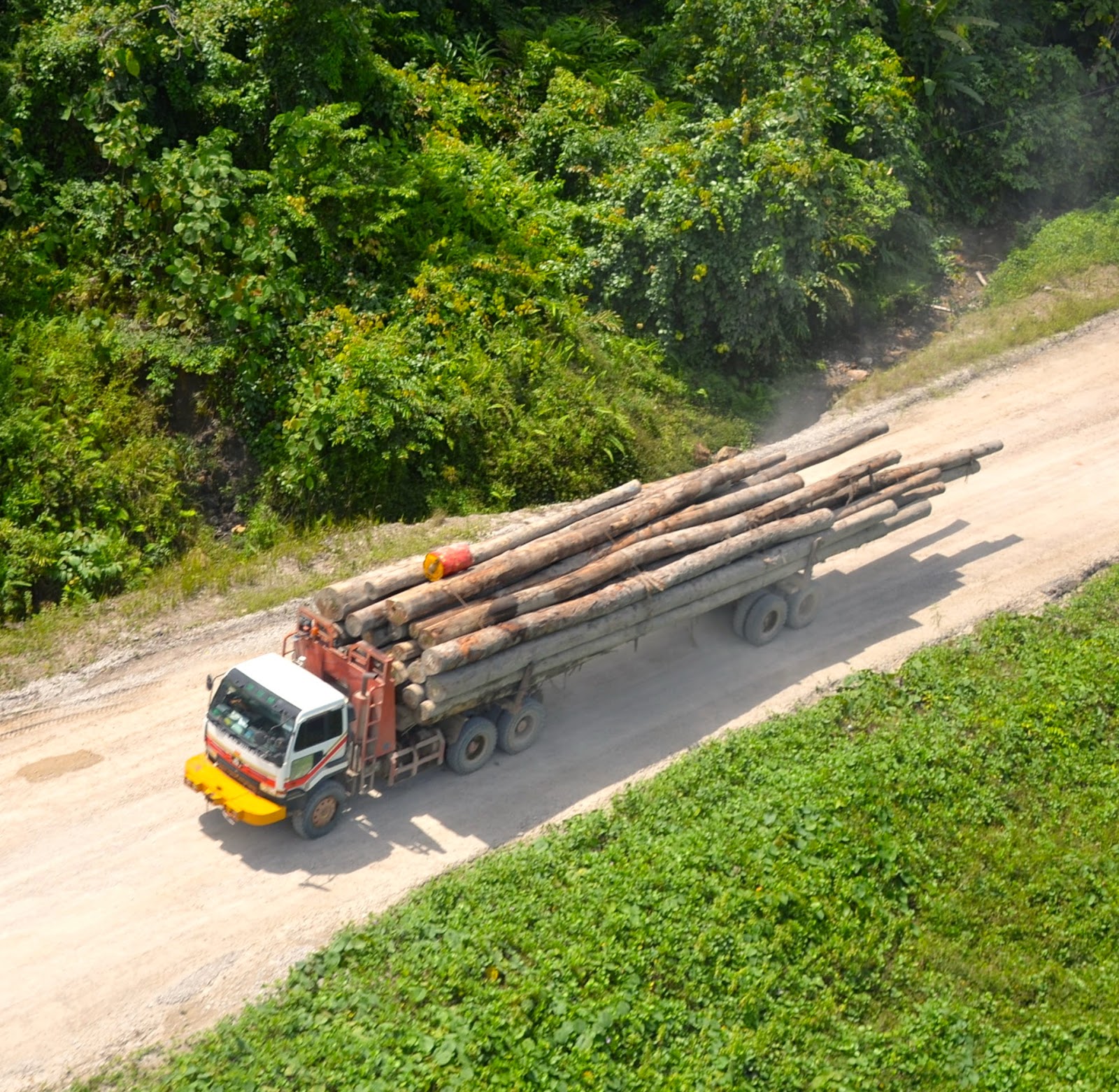 |
| Source: adpartners.org. |
One of the most highly-regarded natural history photographers, National
Geographic Fellow Mattias Klum has a special passion for Borneo, where
he has spent 20 years producing magazine articles, books and films.
Don't miss this powerful and disturbing vision of what might be the
Borneo rain forest's last stand. [National Geographic]
Suscribirse a:
Entradas (Atom)